Myalgic Encephalomyelitis, also known as Chronic Fatigue Syndrome, is a little-understood, female-biased [1] illness. It is estimated that up to 90% of people with the condition go diagnosed [2] and about 25% of sufferers are severely ill [3]. In recognition of the profound physical and psychological impact this disease has on its victims, August 8th has been designated as a Severe ME Awareness Day.
What is Myalgic Encephalomyelitis (ME)?
The disease is best known for a state of extreme and unremitting fatigue. A range of additional symptoms may suggest the presence of an infectious disease: myalgia, nausea, cognitive disturbance, “flu-like” symptoms, sore throat, palpitations, headache, and insomnia [4]. In severe cases of ME, the patient may be bed-ridden and lose the ability to do the simplest of tasks, such as boil eggs for lunch [5] or feed themselves [6].
Diagnosing ME
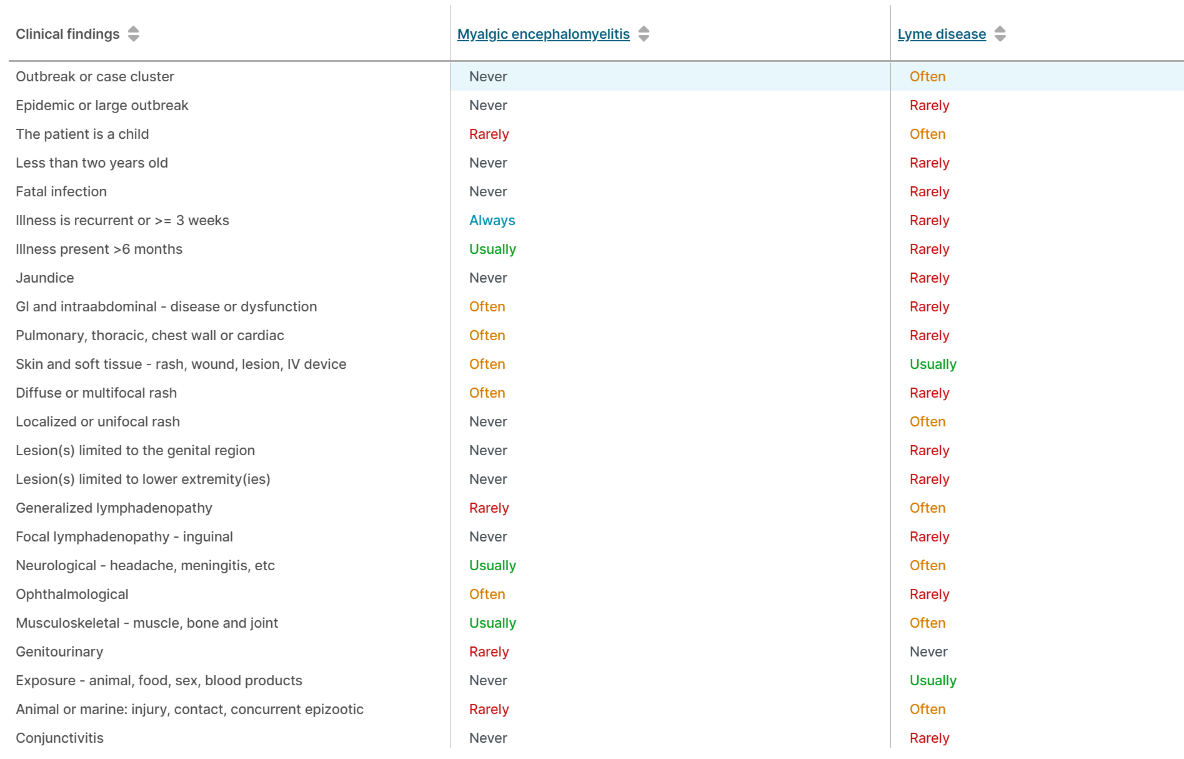
Although outbreaks of possible ME have been recorded since 1955 [7], and several studies have suggested a viral or bacterial etiology, a lack of coherent understanding of etiology and pathogenesis makes the diagnosis of ME particularly difficult. Symptoms may persist for years [8] and patients in general practice settings may be sent from one specialist to another until all other potential disorders (notably Lyme disease [9] [10]) are discounted. Since most patients with ME are ultimately referred to Infectious Diseases specialists, GIDEON lists the condition in its database, allowing clinicians to run a side-by-side comparison with similar diseases.
Treatment to improve the quality of life of ME patients demands significant changes in lifestyle, such as creating a quiet, environment to help reduce the effects of hypersensitivity [11, 12].
There is currently no known cure for this condition. A variety of drugs are currently under review, including Metformin and Momordica charantia extract [13]. Newer diagnostic techniques include a nanoelectronics-blood-based diagnostic biomarker [14].
Follow us on Twitter, Facebook, and LinkedIn for more content like this.
References:
- McGrath, S. (2018). Analysis of data from 500,000 individuals in UK Biobank demonstrates an inherited component to ME/CFS. ME/CFS Research Review. Retrieved 7 August 2020, from https://mecfsresearchreview.me/2018/06/11/analysis-of-data-from-500000-individuals-in-uk-biobank-demonstrates-an-inherited-component-to-me-cfs/.
- What is ME/CFS? | Myalgic Encephalomyelitis/Chronic Fatigue Syndrome (ME/CFS) | CDC. Cdc.gov. (2018). Retrieved 7 August 2020, from https://www.cdc.gov/me-cfs/about/index.html.
- What is Myalgic Encephalomyelitis (ME)?. #MEAction. (2020). Retrieved 7 August 2020, from https://www.meaction.net/about/what-is-me/.
- Myalgic encephalomyelitis. gideononline.com. (2020). Retrieved 7 August 2020, from https://app.gideononline.com/explore/diseases/10405.
- Foggy Friends Where ME/CFS Sufferers Unite Forums – Anna – The M.E Years. Foggyfriends.org. Retrieved 7 August 2020, from https://www.foggyfriends.org/forum/content.php/151-Anna-The-M-E-Years.
- Price, N. (2020). [Image]. Retrieved 7 August 2020, from https://25megroup.org/wp-content/uploads/2020/05/N-Price-.jpg.
- Royal Free Hospital. (1957). An Outbreak of Encephalomyelitis in the Royal Free Hospital Group, London, in 1955. PubMed Central (PMC). Retrieved 7 August 2020, from https://www.ncbi.nlm.nih.gov/pmc/articles/PMC1962472/.
- Foggy Friends Where ME/CFS Sufferers Unite Forums – Members Stories. Foggyfriends.org. Retrieved 7 August 2020, from https://www.foggyfriends.org/forum/content.php/9-Member-Stories.
- Cottle, L., Mekonnen, E., Beadsworth, M., Miller, A., & Beeching, N. (2012). Lyme disease in a British referral clinic. QJM, 105(6), 537-543. https://doi.org/10.1093/qjmed/hcs003
- Patrick, D., Miller, R., Gardy, J., Parker, S., Morshed, M., & Steiner, T. et al. (2015). Lyme Disease Diagnosed by Alternative Methods: A Phenotype Similar to That of Chronic Fatigue Syndrome. Clinical Infectious Diseases, 61(7), 1084-1091. https://doi.org/10.1093/cid/civ470
- Comhaire, F., & Deslypere, J. (2020). News and views in myalgic encephalomyelitis/chronic fatigue syndrome (ME/CFS): The role of co-morbidity and novel treatments. Medical Hypotheses, 134, 109444. https://doi.org/10.1016/j.mehy.2019.109444
- Chronic fatigue syndrome (CFS/ME) – Treatment. nhs.uk. (2017). Retrieved 7 August 2020, from https://www.nhs.uk/conditions/chronic-fatigue-syndrome-cfs/treatment/#medication.
- Severely Affected Patients | Clinical Care of Patients | Healthcare Providers | Myalgic Encephalomyelitis/Chronic Fatigue Syndrome (ME/CFS) | CDC. Cdc.gov. (2019). Retrieved 7 August 2020, from https://www.cdc.gov/me-cfs/healthcare-providers/clinical-care-patients-mecfs/severely-affected-patients.html.
- Esfandyarpour, R., Kashi, A., Nemat-Gorgani, M., Wilhelmy, J., & Davis, R. (2019). A nanoelectronics-blood-based diagnostic biomarker for myalgic encephalomyelitis/chronic fatigue syndrome (ME/CFS). Proceedings Of The National Academy Of Sciences, 116(21), 10250-10257. https://doi.org/10.1073/pnas.1901274116